The Awakening: A Volcano Erupts After 12,000 Years, Making Ethiopia's Danakil Depression the Epicenter of Adventure
Ethiopia’s 12,000-Year Volcano Awakens — And Why the Danakil Depression Should Be Your Next Adventure
When Ethiopia’s ancient Hayli Gubbi volcano erupted for the first time in 12,000 years, the world turned its eyes to the Afar region—a place where continents split, lava flows, and the Earth reveals its deepest secrets.
For adventure travelers, this eruption isn’t just breaking news.
It’s an invitation.
An invitation to explore one of the most extreme, surreal, and geologically active places on the planet:
the Danakil Depression — Africa’s final frontier for raw, untamed exploration.
If you’re dreaming of truly epic Adventure Tours in Ethiopia, here’s why this moment matters, and why traveling into the Danakil right now is unlike anything else on Earth.
A Volcano Awakens After 12,000 Years
On 23 November 2025, the Hayli Gubbi volcano—located in Ethiopia’s remote Afar region—erupted for several hours, sending a towering column of ash 14km into the sky.
Ash clouds drifted across:
-
Yemen
-
Oman
-
Northern India
-
Pakistan
The eruption forced flight diversions in India and blanketed several Afar villages in volcanic dust.
Miraculously, no human lives were lost, though local herding communities reported challenges as ash covered grazing lands.
Scientists were stunned. According to the Smithsonian’s Global Volcanism Program, Hayli Gubbi had no known eruptions during the entire Holocene, the last 12,000 years.
This event is a dramatic reminder that Ethiopia lies in one of Earth’s most active geological zones—where continents pull apart and deep-earth forces constantly reshape the land.
Why This Eruption Puts the Danakil Depression Back in the Spotlight
The Danakil Depression sits within the same Afar Rift System, where three tectonic plates tear the land apart.
This incredible tension creates:
-
Lava lakes
-
Acid springs
-
Salt lakes
-
Craters
-
Earthquakes
-
Active volcanoes
For travelers seeking destinations that push boundaries and ignite the imagination, the Danakil is the most visually extraordinary and scientifically fascinating place in Ethiopia.
If the eruption made you crave the thrill of witnessing the planet’s power up close, the Danakil is where you go.
🌍 What Makes the Danakil Depression So Unique?
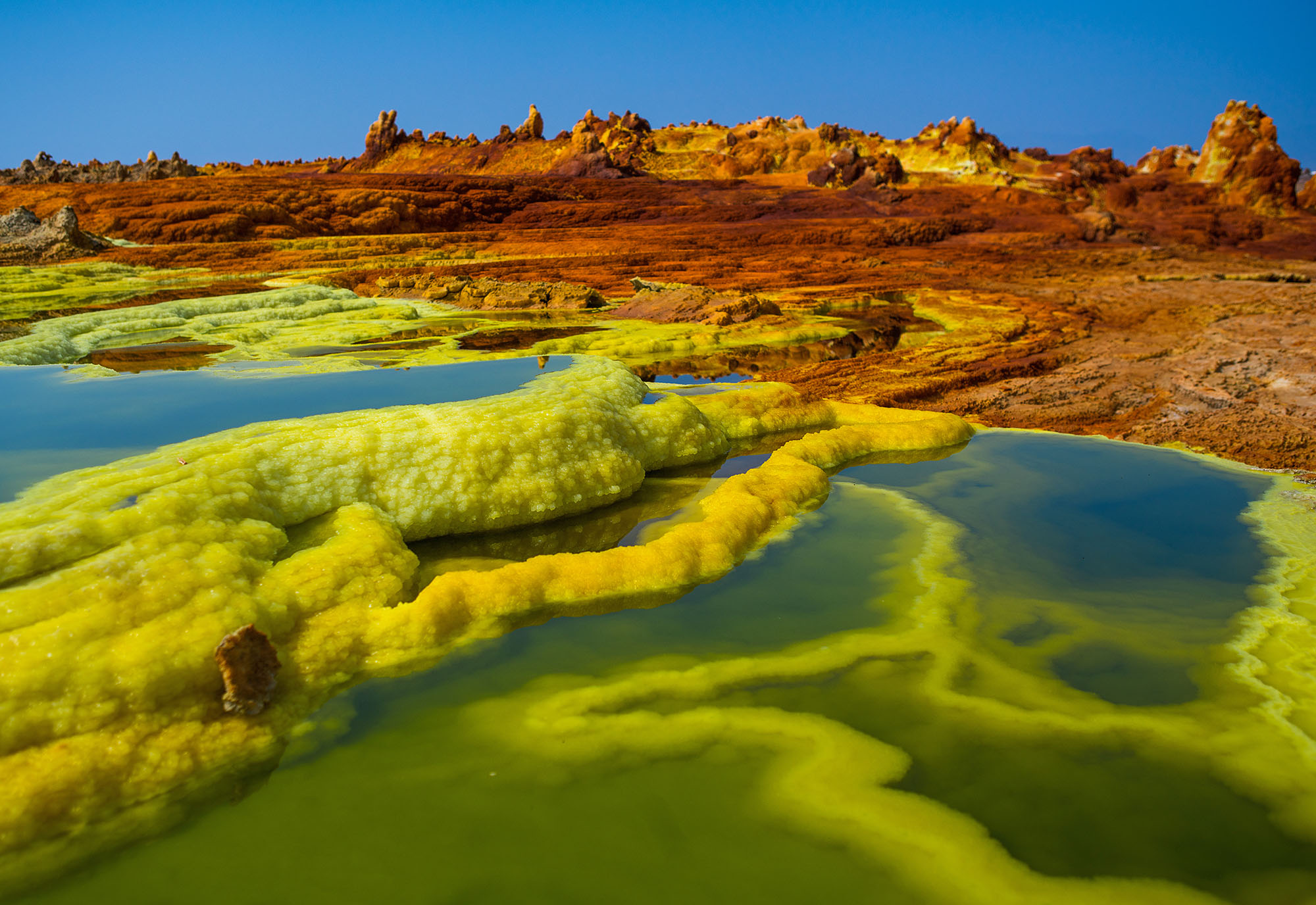
Often described as the closest thing to walking on another world, the Danakil Depression is:
-
One of the hottest places on Earth
-
One of the lowest points on the continent (over 100m below sea level)
-
One of the few places where you can stand beside an active lava lake
-
Home to the vibrant hydrothermal wonderland of Dallol
Its landscapes are wild, surreal, and constantly shifting—a true adventure destination for travelers who want more than standard sightseeing.
🔥 Formation of the Danakil: A Playground for Geology Lovers
The Danakil Depression was formed by the slow separation of the African and Arabian tectonic plates.
This geological tearing created:
-
Erta Ale, the iconic shield volcano with a glowing lava lake
-
Dallol Crater, famous for its neon-colored acidic pools
-
Salt lakes like Karum and Afrera
-
Vast salt flats shaped by wind, heat, and Afar salt caravans
Every visit feels like stepping onto Mars.
🌋 Top Experiences on a Danakil Depression Tour
1. Trek to the Erta Ale Lava Lake
Experience one of the world’s rare permanent lava lakes. The night hike to the crater is challenging, but the sight of molten rock swirling beneath you is unforgettable.
2. Explore the Dallol Hydrothermal Fields
Witness vibrant yellows, greens, and oranges in one of the most colorful geothermal landscapes on Earth.
3. Walk the Salt Flats With Afar Caravans
See how salt is cut, shaped, and loaded onto camels—a tradition unchanged for centuries.
4. Visit Lake Karum & Lake Afrera
These hypersaline lakes offer mirror-like reflections and surreal, otherworldly views.
For travelers booking danakil-depression-tour-packages, these are the signatures of an expedition you will talk about for years.
☀️ Best Time to Visit the Danakil Depression
Because temperatures often rise above 40°C, the ideal time for adventure is:
➡️ September through May
Conditions are slightly cooler, and access routes from Mekele operate more smoothly.
🛡️ Safety in the Danakil: What to Expect
All responsible tour operators include:
-
Armed local Afar scouts
-
Professional guides
-
Reliable 4x4 vehicles
-
Safety briefings around geothermal zones
-
Masks for volcanic fumes (especially on Erta Ale)
The Afar people are remarkable hosts, and your visit supports their communities through responsible tourism.
🎒 What to Pack
-
Strong hiking boots
-
Breathable clothing
-
Hat & sunglasses
-
Sunscreen
-
Electrolytes & plenty of water
-
A face mask for volcanic gases
-
A spirit of adventure
🧭 Why Now Is the Time to Visit
The 12,000-year-in-the-making eruption of Hayli Gubbi is a reminder that the Afar region is alive—changing, reshaping, and evolving before our eyes.
There are very few places in the world where you can witness Earth’s forces this closely.
And none offer the color, intensity, and raw power of the Danakil Depression.
For adventure travelers, it’s simple:
If you want a destination that feels truly wild and alive, the Danakil Depression is your next journey.
🐪 Plan Your Expedition With Sawla Tours
Sawla Tours specializes in curated Adventure Tours in Ethiopia, offering expertly led danakil-depression-tour-packages that bring you face-to-face with Afar’s volcanic wonders.
Travel with:
-
Skilled local guides
-
Secure logistics
-
Mobile tented camps
-
Cultural interactions with Afar communities
-
Safety-first expedition planning
This isn’t just a tour—it’s an expedition into the Earth’s most extraordinary landscapes.
🌋 Final Thoughts
The eruption of Hayli Gubbi is a rare geological moment, a reminder of how dynamic and powerful Ethiopia’s landscapes are.
For travelers seeking adventure, beauty, and unforgettable natural phenomena, the Danakil Depression offers an experience like nowhere else on Earth.
Ready for the journey?
The Danakil is waiting.
.jpg)


Comments
Post a Comment